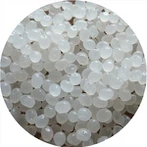
The difference between bio-based PTT fiber and petroleum-based PTT fiber is that it uses 1,3-PDO obtained by biological method. The total cost of this method is 25% cheaper than the preparation of petroleum-based 1,3-PDO. With the overuse of limited oil resources and the gradual increase in oil prices, the production of 1,3-PDO by biosynthesis has attracted worldwide attention. Compared with traditional chemical synthesis methods, biological methods have the advantages of renewable raw material sources, mild reaction conditions, good selectivity, less by-products, and less environmental pollution.
Bio-based 1,3-PDO was prepared by DuPont and Genencor by microbial fermentation and was successfully put into production. Domestic enterprises and universities have also begun to invest in bio-based 1,3-PDO technology research and development, such as Tsinghua University, Dalian University of Technology, East China University of Science and Technology, Jiangnan University, etc., which have achieved phased results. At present, the biological preparation of 1,3-PDO mainly includes the following methods:
(1) Glycerol conversion method
The glycerol conversion method is that glycerol is converted into 1,3-PDO under anaerobic conditions and the action of fungi (such as lemon bacteria, clostridium butyricum, pneumoniae, lactobacillus, etc.). For countries with higher glycerol prices, the method of directly preparing 1,3-PDO from glycerol is more expensive. Consequently, lower-cost methods such as glucose-based or biodiesel conversion have emerged one after the other.
(2) Glucose conversion method
▲One-step method: DuPont and Genencor have jointly developed a one-step method for the production of bio-based 1,3-PDO, which uses glucose as a substrate to convert into 1,3-PDO under the action of genetically engineered bacteria, which improves production efficiency. , which can greatly reduce the production cost.
▲Two-step method: Tsinghua University proposed a production process with glycerol as the base material and glucose as the auxiliary substrate. The glucose is converted into glycerol under the action of hypertonic yeast, and then converted into 1 by Klebsiella pneumoniae. , 3-PDO. Dalian University of Technology uses corn as raw material to produce 1,3-PDO by two-step fermentation.
(3) Biodiesel conversion method
About 100kg of glycerol is produced per ton of biodiesel, so the crude glycerol obtained from biodiesel has a certain cost advantage to prepare 1,3-PDO by biological fermentation. In 2011, Jiangsu Shenghong Group cooperated with Tsinghua University to produce 1,3-PDO from glycerol, a by-product of biodiesel, and built a 30,000-ton/year production unit.
1. Synthesis process
Bio-based PTT is obtained by polymerizing dimethyl terephthalate (DMT) or purified terephthalic acid (PTA) and bio-based 1,3-PDO, and then melt spinning or electrospinning to obtain bio-based PTT fibers. The polyester synthesis process can be roughly divided into the following two types:
①Direct esterification method (PTA method): This method uses PTA and 1,3-PDO as raw materials, and undergoes an esterification reaction under the action of a catalyst to obtain an intermediate product BHPT, and then further undergoes a polycondensation reaction to obtain PTT.
②Transesterification method (DMT method): Dimethyl terephthalate (DMT) is transesterified with 1,3-PDO, and the transesterification is carried out at 140-220°C. Using Ti-based catalyst, methanol is first removed, and the temperature is raised to 270 ℃ and reduced pressure to 5kPa to carry out polycondensation to obtain PTT.
Compared with the DMT method, the PTA method has a lower production cost, a mature and reasonable process, and high production efficiency. Therefore, the direct esterification method is the main method for large-scale preparation of PTT.
2. Performance
The surface morphological structure of PTT fiber is in the shape of a smooth strip, with strong light reflection and refraction, and strong fiber luster; there are gaps on the surface, which have certain moisture conduction, ventilation and warmth retention; it can be made into various fiber products with different cross-sectional shapes , and can also be directly processed into colored PTT fibers in the manufacturing process, which is convenient for selection.
The "Z"-shaped helical structure of PTT fiber makes it have higher elasticity and better resilience than other fibers. Due to the lower glass transition temperature of PTT fiber, it can be dyed at atmospheric pressure. Due to the special structure of PTT, the dye can easily enter the fiber, so the dyeing performance is better than that of PET fiber. PTT fiber combines the advantages of various fibers, such as the stain resistance of polyester, the softness of nylon, and the bulk of acrylic. The elongation of PTT is as good as that of spandex, and it is easier to process than spandex, which is very suitable for textile and apparel fabrics.
PTT fiber also has good thermal stability, anti-wrinkle, anti-static, anti-ultraviolet and so on.
3. Application
The excellent properties of PTT fiber make it very suitable for clothing fabrics. Its good dyeability and printing adaptability can be used to produce a variety of dyed fabrics, stain resistance can make clothes easier to care and wash, its soft hand and elasticity, low water absorption and good drape can be Improve the wearing comfort of clothing. Better performance products can be obtained by blending PTT fibers with other fibers. For example, PTT fibers are interwoven with cellulose fibers such as cotton, viscose, tencel, hemp, etc., which have good hand feel and anti-folding properties, and can be used for knitted underwear, woven fabrics, etc.
PTT and mulberry silk are interwoven for memory fabrics, which can make up for the defects of mulberry silk products that are difficult to handle. PTT fiber used in memory fabric can make it lighter, softer and skin-friendly, more absorbent and breathable.