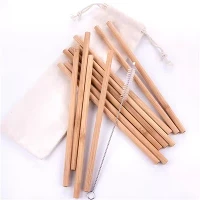
Polylactic acid (PLA) is one of the degradable plastics with mature research and application. Its raw materials come from renewable plant fibers, corn, agricultural by-products, etc., which have good biodegradability. PLA has excellent mechanical properties, similar to polypropylene plastics, and can replace PP and pet plastics in some fields. At the same time, it has good gloss, transparency, hand feel and certain antibacterial properties.
Production status of PLA
At present, there are two synthetic routes of PLA. One is direct polycondensation, that is, direct dehydration and polycondensation of lactic acid under high temperature and low pressure. The production process is simple and low cost, but the molecular weight of the product is uneven, and the practical application effect is poor. The other is lactide ring opening polymerization, which is the mainstream production method at present.
2. Degradability of PLA
PLA is relatively stable at room temperature, but it is easy to degrade rapidly into CO2 and water in slightly higher temperature environment, acid-base environment and microbial environment. Therefore, by controlling the environment and fillers, PLA products can be safely used within the validity period, and can be degraded in time after being discarded.
The factors affecting PLA degradation mainly include molecular weight, crystalline state, microstructure, environmental temperature and humidity, pH value, light time and environmental microorganisms. The blending of PLA with other materials can affect the degradation rate. For example, adding a certain amount of wood flour or corn straw fiber to PLA can greatly accelerate the degradation rate.
The factors that affect the barrier property of PLA mainly include self factors (molecular structure and crystalline state) and external factors (temperature, humidity, external force).
1) Heating PLA film will reduce its barrier property, so PLA is not suitable for food packaging that needs heating.
2) Stretching PLA in a certain range can increase the barrier property. When the draw ratio is increased from 1 to 6.5, the crystallinity of PLA is greatly improved, so the barrier property is improved.
3) Adding some barriers (such as clay and fiber) to PLA matrix can improve the barrier property of PLA. This is because the barrier extends the curved path of the water or gas permeation process of small molecules.
4) Coating on the surface of PLA film can improve the barrier property.
4. Mechanical properties of PLA
PLA has good strength, but it lacks toughness and is easy to bend and deform, so it usually needs toughening modification. In order to ensure the biodegradability of PLA, biodegradable resin is usually used for blending toughening modification. PBAT, PBS, PCL, natural rubber and other substances can improve the toughness of PLA.
5. Optical properties of PLA
PLA has the transparency and gloss rarely seen in other degradable plastics, which is equivalent to cellophane and pet. It is especially suitable for visual packaging, and the decoration effect is good. Generally, the transparency and gloss of PLA do not need to be improved. It should be noted that when modifying in other aspects, its good transparency should not be reduced as much as possible to ensure its packaging visibility and decoration effect.
6. Thermal properties of PLA
The thermal stability of PLA material is equivalent to that of PVC, but lower than that of PP, PE and PS. the processing temperature is generally controlled between 170~230 ℃, which is suitable for injection, stretching, extrusion, blow molding, 3D printing and other processing processes.
In the actual processing process, the crystallization rate of PLA is slow and generally needs to be modified. Due to the slow crystallization rate and low crystallinity, the thermal deformation temperature of PLA is low, which limits its application in hot filling or hot sterilization product packaging.
In order to improve the crystallization rate and crystallinity of PLA, the optical purity of PLA can be improved as much as possible during production. Annealing treatment is also a method to improve the crystallinity of PLA. In addition, nucleating agent can be added to improve the crystallization behavior, increase its crystallinity, and then increase the thermal deformation temperature and improve its heat resistance.
7. Antibacterial properties of PLA
PLA can form a weak acidic environment on the surface of products, which has antibacterial and mildew proof effects. If other antibacterial agents are used as an auxiliary, the antibacterial rate can reach more than 90%, which can be used for antibacterial packaging of products.
The commonly used inorganic antibacterial agents mainly include silver, copper, zinc and other metal ions or oxides. The commonly used organic antibacterial agents in packaging include vanillin or ethyl vanillin aldehyde compounds. The food safety of other antibacterial agents needs to be studied. Generally, organic antibacterial agents have poor heat resistance and short validity.
PHA is a kind of bioplastics with great significance. Because it is bio based and biodegradable under environmental conditions, it has become a real "green" plastic. Its excellent performance, and will not accumulate in the environment, as a commercial plastic, its prospect is exciting.
PHA is considered as the bioplastics of the future. They show all the characteristics of Green Plastics: they are bio based, biosynthetic, biodegradable in the natural environment, compostable and biocompatible. Biodegradability is the most interesting characteristic of PHA. Another bioplastic, polylactic acid (PLA), is the most widely used biologically derived polymer at present, but it can only be decomposed in industrial composting facilities. On the other hand, PHA is degraded into carbon dioxide and water in the presence of oxygen, and into methane in anaerobic degradation, avoiding the accumulation of micro / nano plastics.
PHA production technology is unique in (biological) plastic production. It relies on biological process engineering, involving the biological process of microbial cultures forming PHA in cells as carbon and energy storage. Polymerization is all completed by microorganisms; Chemical synthesis is not involved. There are many changes in the synthesis method, but the production of PHA basically follows the following four different process stages:
Growth and accumulation. Feed the bacterial culture with carbon source (such as sugar) to promote the growth of biomass, thereby increasing the concentration of microbial culture. Then the culture is deprived of essential nutrients (such as phosphorus, nitrogen and even oxygen), which will inhibit the reproduction of the culture and promote the carbon source to be stored as PHA in the cell (PHA is also known as bacterial fat).
Unlike PLA with a single structure, PHA can have a variety of structures by changing strains or fermentation process, which can meet the needs of downstream diversified consumption scenarios. At present, more than 150 kinds of PHA monomers have been found, forming a huge polymer family. This time, the base of weiqi biology will be the production line that can produce the most types of PHA in the world. The production line that takes the lead in mass production will produce dozens of materials mixed with PHA, PHB and p34hb.
The performance of PHA material is so excellent, but how to improve the output has always been a difficult problem for researchers.
PHA material is a cost leading market. Once the problem of large-scale production is solved, PHA will have broad application prospects.