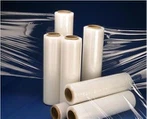
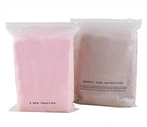
When consumers get degradable plastic products, they may not expect that the degradable plastics industry has undergone many technological innovations, trial and error and correction.
"Photodegradable plastics" is the origin of my country's degradable plastics industry. In the early 1970s, plastic film technology entered my country and was applied in the agricultural field to improve crop yields. But as more and more plastic film accumulates in the soil, it brings problems such as "white pollution".
Based on this, photodegradable plastics came into being. Photodegradable plastic olefin polymers can change from macromolecules to small molecular segments after being irradiated by light, but this is only "disintegration" and cannot fundamentally degrade the polymers into substances that are harmless to the environment. The small fragments generated by disintegration still remain in the soil and cannot be recycled, which affects the growth of plant roots, and may even enter the human body through the food chain, endangering human health.
The road to "photodegradation" is not feasible, so by the 1990s, degradable plastics entered the stage of starch-added degradable plastics, and product development mainly focused on the direction of "filled starch plastics". Filled starch plastics mainly use starch as fillers in polyethylene (PE), polypropylene (PP), etc., usually with a filling amount of 10%-30%.
"Filled starch plastics still essentially contain polyolefin polymers such as PE and polystyrene (PS), which can only be partially degraded, and there are still environmental hazards." Now, degradable plastics have reached the stage of fully degradable plastics. Fully degradable plastics include PLA, PBAT, polyhydroxyalkanoate (PHA) and other natural polymer materials such as biodegradable plastics. Most have the advantages of complete biodegradability, good mechanical properties and processability.
The data shows that in the past five years, the average annual growth rate of biodegradable plastics consumption in my country is about 20%. In 2019, the domestic consumption of biodegradable plastics is about 260,000 tons. With the intensive introduction and gradual implementation of the policy of banning and restricting plastics, the key replacement areas are disposable films, express packaging, and online takeaways. It is estimated that by 2025, the above-mentioned fields are expected to achieve a substantial replacement of biodegradable plastics, with a conservatively estimated demand of about 6.93 million tons, and about 13.86 million tons by 2030.
The bottleneck in the development of biodegradable plastics is gradually breaking
In addition to replacing traditional plastics in the fields of disposable films and express packaging, biodegradable plastics can also be used in agricultural mulching films, textile fibers, durable plastic tableware, automotive industry products, foam products, 3D printing materials and other fields
In the short term, as the production capacity of biodegradable plastics is gradually released, the price growth rate will gradually slow down. In the long run, with the diversification of raw materials and the advancement of technology, the price of biodegradable plastic products will generally decline.