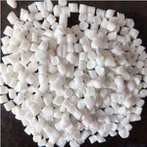
ABS resin is one of the five major synthetic resins. It has excellent impact resistance, heat resistance, low temperature resistance, chemical resistance, and electrical properties. It also has the characteristics of easy processing, stable product dimensions, and good surface gloss. It is easy to paint , Coloring, and can also perform secondary processing such as surface metal spraying, electroplating, welding, hot pressing and bonding. It is widely used in machinery, automobiles, electronic appliances, instrumentation, textiles and construction and other industrial fields. It is a very useful Wide range of thermoplastic engineering plastics. Acrylonitrile-butadiene-styrene copolymer is a terpolymer composed of acrylonitrile, butadiene and styrene.
Most ABS are non-toxic and impervious to water, but slightly permeable to water vapor, and have low water absorption. The water absorption rate of room temperature immersion does not exceed 1% for one year and the physical properties do not change. The surface of abs resin products can be polished, and highly glossy products can be obtained.
ABS has excellent comprehensive physical and mechanical properties, and excellent low-temperature impact resistance. Dimensional stability. Electrical properties, abrasion resistance, chemical resistance, dyeability, finished product processing and mechanical processing are better. Abs resin is resistant to water, inorganic salts, alkalis and acids. It is insoluble in most alcohols and hydrocarbon solvents, but easily soluble in aldehydes, ketones, esters and some chlorinated hydrocarbons.
Good compatibility and degradability. Polylactic acid is also widely used in the field of medicine, such as the production of disposable infusion equipment, non-dismantling surgical sutures, etc., and low-molecular-weight polylactic acid as a drug sustained-release packaging agent.
In addition to the basic characteristics of biodegradable plastics, polylactic acid (PLA) also has its own unique characteristics. The strength, transparency and resistance to climate change of traditional biodegradable plastics are not as good as ordinary plastics. The basic physical properties of polylactic acid (pla) and petrochemical synthetic plastics are similar, that is to say, it can be widely used to manufacture various application products.
Polylactic acid also has good gloss and transparency, which is comparable to films made of polystyrene, and cannot be provided by other biodegradable products. Polylactic acid (pla) has the best tensile strength and ductility. Polylactic acid can also be produced by various common processing methods, such as melt extrusion molding, injection molding, blown film molding, foam molding and vacuum molding. The widely used polymer has similar forming conditions, in addition it also has the same printing performance as traditional films.