What is special about starch-based plastics and how can they be modified?
Starch is a natural macromolecule that is second only to cellulose in production on earth. It is rich in source, renewable and inexpensive. It can be used to produce starch-based plastics through modification and plasticization.
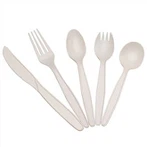
As an important category of bio-based materials, starch-based plastics have successfully achieved industrial production and application. Starch-based plastic is a kind of plastic product that is made of starch as the main raw material, modified and plasticized and then blended with other polymers. It is a kind of bioplastic. Starch-based bioplastics are widely used in plastic packaging materials, shock-proof materials, plastic films and plastic bags, disposable tableware, food containers, toys, etc.

What's so special about starch-based plastics?
There are no three wastes in the production process of starch-based plastics, which will not cause new pollution to the environment;
2. Starch-based plastics have the same and similar performance as similar traditional plastic products;
3. Starch-based plastic materials and products do not contain plasticizers, bisphenol A, heavy metals and other toxic and harmful substances;
4. Starch-based bio-based plastics and products have the advantages of saving oil resources and reducing carbon dioxide emissions;
5. Starch-based biodegradable plastics and products have the advantages of being completely biodegradable, compostable, and realizing the harmless treatment of garbage;
6. The cost of starch-based fully biodegradable materials and products is about twice that of ordinary petroleum plastics. Starch is a natural high molecular polymer, and the preparation process of thermoplastic starch mostly adopts extrusion, injection and molding, etc., and the plasticizers used are generally water, glycerin, etc. Starch molecules contain a large number of hydroxyl groups (molecular structures are II and III), so the interaction between starch macromolecules is very strong, making it difficult to melt processing native starch, and it is compatible with other polymers in the blending process with other polymers. Sex is also poor. However, these hydroxyl groups can undergo chemical reactions such as esterification, etherification, grafting, and cross-linking. Using chemical reaction to chemically modify starch, reduce the hydroxyl group of starch and change its original structure, so as to change the corresponding properties of starch, and turn native starch into thermoplastic starch.
Methods of chemical modification of starch
The chemical modification of starch is mainly based on the presence of a large number of -OH active groups in its structure.
OH reactive group
1. Esterification, transesterification or etherification The hydroxyl groups on the starch molecule undergo esterification and transesterification reactions with fatty acids, fatty acid esters, etc. to generate starch esters, which can change the hydrophilicity of starch to hydrophobicity.
2. Cross-linking reaction In order to improve the strength and heat resistance of starch materials, starch is subjected to cross-linking reaction with compounds with two or more functional groups (such as polybasic acids, etc.) to make starch moderately cross-linked.
3. Blending modification copolymerization Most starch plastics are prepared by filling and blending starch with other polymer materials. Due to poor compatibility and low strength, the products obtained in this way have limited scope of use. In starch-based plastics, starch is also copolymerized during starch modification to obtain graft copolymers of starch and other polymers, thereby improving the compatibility of starch with other polymer materials. Through chemical modification, three modifications of starch are realized: hydrophilicity is changed to hydrophobicity; heat sensitivity is changed to temperature resistance; hard brittleness is changed to plasticity. This modification solves the worldwide problem of starch modification and lays a good foundation for subsequent processing.
4. Etherified starch A lot of research has been done on the hydroxyethylation reaction of starch, and its reaction mechanism is a nucleophilic substitution reaction. The mechanism is shown in the following figure:
Propylene oxide easily reacts with starch under alkaline conditions to obtain hydroxypropyl starch. The reaction mechanism is a nucleophilic substitution reaction. The mechanism is shown in the following figure:
The granule morphology of hydroxyethyl starch with low degree of substitution (0.05 ~ 0.1MS) is the same as that of native starch, but many properties have changed significantly. The presence of hydroxyethyl groups enhances the hydrophilicity of starch and destroys the hydrogen bonds between starch molecules. At low energy, starch granules can expand and gelatinize to form colloidal paste. With the increase of substitution degree, gelatinization occurs. temperature decreases, as shown in the table below:
Hydroxypropyl starch is hydrophilic, which weakens the strength of the internal hydrogen bonds of the native starch granule structure, making it easy to expand and gelatinize. With the increase of the degree of substitution, the gelatinization temperature decreases, and finally it can expand in cold water.
Characteristics of modified starch
1. Hydrophobicity The starch is completely hydrophobic after chemical modification, and the moisture content is less than 1%, which has good compatibility with other synthetic polymer materials.
2. Temperature resistance Modified starch can withstand high temperature of 230℃ during thermoplastic processing without turning yellow or decomposing.
3. Thermoplastic Modified starch can be thermoplastically processed on plastic processing equipment. The starch-based plastics produced by the company are divided into two series: bio-based and biodegradable. According to different processing techniques, they are divided into blown film materials, injection plastics, sheet materials and foamed materials. They can replace ordinary petrochemical plastics and are widely used in industry, medicine, Packaging of food, electrical appliances and other products, tableware, kitchen utensils, toys and flower planting and other fields. Thereby saving a lot of petroleum resources, reducing carbon dioxide emissions, realizing the harmless disposal of garbage, and helping to promote agricultural development and farmers' income, and promote the vigorous development of circular economy.
Starch-based biodegradable plastic is generally a blend of modified starch and biodegradable polyester (such as PLA/PBAT/PBS/PHA/PPC, etc.), which can be completely biodegradable, compostable, non-polluting to the environment, and waste suitable for composting , landfill, etc.
Starch-based bio-based plastics are generally a mixture of modified starch and polyolefins (such as PP/PE/PS, etc.), and its environmental significance lies in that it can reduce the use of petrochemical resources, reduce carbon dioxide emissions, and the waste is suitable for incineration. Both of these materials can replace traditional petroleum-based plastics and are widely used in plastic packaging materials, shock-proof materials, plastic films and plastic bags, disposable tableware, food containers, toys, etc.