PLA, one of the most widely used plastics for 3D printing: characteristics and application scenarios
Production and characteristics of PLA
PLA is made from organic and renewable resources such as corn starch, cassava roots, or sugarcane.
One characteristic of polylactic acid materials is their non Newtonian nature, which is a pseudoplastic fluid whose viscosity changes with shear rate. Therefore, it does not have a constant viscosity value, which varies with operating conditions. More specifically, PLA is a shear thinning material whose viscosity decreases as the shear rate increases. The ease of use and main behavior of this material when used as a 3D printing material will be discussed below.
PLA shape in 3D printing
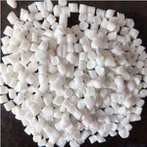
PLA is one of the most widely used materials in FFF 3D printing. People who are new to 3D printing often learn from FFF printing technology because it is very easy to use. Printing materials typically exist in the form of filaments, but can also exist in the form of particles. Although the material feed source and melting system may vary depending on the state of the PLA (through a filament extruder or particle hopper), the characteristics of the material and final component are the same. In this article, we will pay more attention to the filament form of PLA, as it is the most common form of this thermoplastic.

● PLA is considered to be a semi crystalline polymer with a melting temperature between 170-180 ° C, which is relatively low compared to ABS filaments with a melting temperature of 200 260 ° C. This avoids the need to use a heated tray and close the printing room.
● If the material is properly cooled, filaments will provide good performance under printing parameters such as high speed.
● PLA components often have very low deformability.
● It should be noted that the viscosity of PLA is higher than that of other standard thermoplastics, and if not careful, it may cause blockage., If stored at 15 to 25 ° C, the shelf life of the filament is at least 1 year. ABS is the other most commonly used thermoplastic in FDM 3D printing. It has high strength and flexibility, and is not prone to warping. However, it is still recommended to use PLA in components with low mechanical complexity, as it is very convenient and fast to use.
● In terms of post processing, PLA generally does not require complex steps. When removing parts, you may encounter adhesion issues with the first print layer. Therefore, it is recommended to use special adhesives on the printing plate to facilitate component disassembly. To improve the surface condition of parts, users can grind them and treat them with acetone if necessary. If a support is used, it can be easily removed using tweezers, and if a soluble support structure is used, it can be dissolved.
Application of PLA in 3D printing
PLA is an easily available plastic that is easy to use in 3D printing, but that doesn't mean it has only advantages. Its characteristics lead to fragile printing components, low strength, and sensitivity to sunlight and high temperatures, making it more suitable for beginners to use, especially for making decorative elements, small tools, and toys.
However, PLA is not limited to the world of makers. For example, many industries also use this thermoplastic for prototyping. This saves the company a lot of money because there is no need to create molds. In addition, industries such as automobiles also use PLA filaments, which can be used to create certain components of automotive accessories and even instrument panels.