What is pbat and pla materials?

PBAT (butyleneadipate-co-terephthalate), a thermoplastic biodegradable plastic. It has the properties of PBA and PBT. It has good ductility and elongation at break, as well as good heat resistance and impact performance. In addition, it has excellent biodegradability and is one of the most active biodegradable materials in biodegradable plastics research and market application.
Characteristics: PBAT is a semi-crystalline polymer, usually the crystallization temperature is around 110°C, the melting point is around 130°C, and the density is between 1.18g/ml~1.3g/ml. The crystallinity of PBAT is about 30%, and the Shore hardness is above 85. PBAT is a copolymer of aliphatic and aromatic, which combines the excellent degradation performance of aliphatic polyester and the good mechanical properties of aromatic polyester. The processing performance of PBAT is very similar to that of LDPE, and the film can be blown with LDPE processing equipment.
what is pbat made from?
PBAT is based on 1,4-butanediol (BDO), adipic acid (AA), terephthalic acid (PTA) or glycol terephthalate (DMT) as raw materials, through direct esterification or transesterification And made.
Is pbat biodegradable?
Yes,pabt material can biodegradable.
What are the applications of PBAT?
PBAT materials can not only be biodegradable but also compostable, so the use of PBAT can fight against white pollution. The biodegradable garbage bags produced by PBAT are the membrane materials used by the bio-composting garbage center to recycle biological waste, and are mainly used in: fully degradable packaging film; Fully degradable packaging bags, including shopping bags, rolled garbage bags, pet feces bags, electronic product packaging bags, food packaging bags, mulching film, etc.
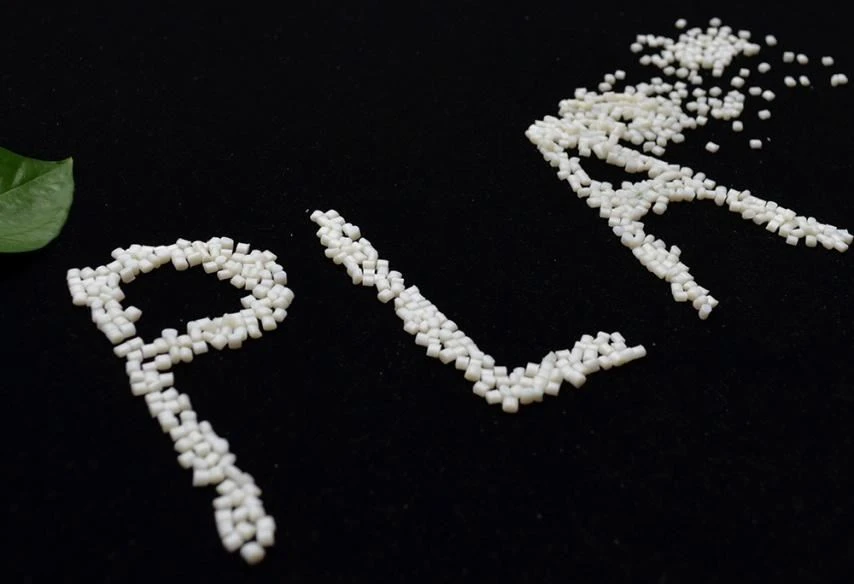
Polylactic acid (PLA) is a new kind of biobased and renewable biodegradable material, which is made from starch proposed by renewable plant resources (such as corn and cassava). Starch raw materials obtained glucose through saccharification, and then fermentation of glucose and certain strains to produce high purity lactic acid, and then through chemical synthesis method to synthesize polylactic acid of a certain molecular weight. It has good biodegradability. After use, it can be completely degraded by microorganisms in nature under specific conditions, and finally produce carbon dioxide and water without polluting the environment, which is very beneficial to environmental protection.


