Recently, 3D printing material company eSUN collaborated with Yum! Brands to jointly develop and launch "PLA-Coffee," a 3D printing filament made from coffee grounds.
This innovative, eco-friendly material debuted at the China International Supply Chain Expo (CISCE) in Beijing, where it was showcased in the Yum! Brands sustainability exhibition area. The product attracted coverage from CCTV News and stands as a benchmark project for the circular economy, bridging the gap between the food service and new materials industries.
**Complementary Resources: Establishing a Recycling Loop for Coffee Grounds**
Leveraging KFC's nationwide store network, a standardized, centralized recycling channel for coffee grounds has been established. A steady supply of waste coffee grounds provides stable, renewable organic raw material for new material production.
eSUN utilized its expertise in polymer modification technology to achieve the industrial-scale transformation of food service waste into printing filament. The two companies collaborated to integrate the entire process-recycling, deep processing, and smart 3D manufacturing-enabling the high-value reuse of waste materials.
**PLA + Coffee Grounds: Solving Material Compatibility Challenges**
Coffee grounds contain natural oils and high moisture levels, making them difficult to blend directly with PLA plastic base materials. eSUN's R&D team developed a customized modification process to ensure the uniform distribution of coffee particles within the filament.
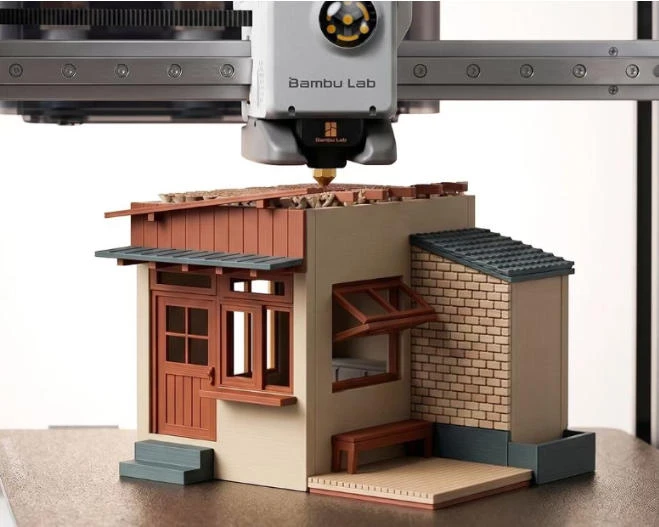
The finished filament meets market standards for standard PLA materials regarding printing fluidity, dimensional accuracy, and structural strength. It features a natural coffee-toned hue and a tactile, fine-grained texture, making it instantly recognizable.
**Coffee Grounds x 3D Printing: A Natural, Organic Aesthetic**
Conventional plastic filaments often have high reflectivity, making printing layer lines highly visible and detracting from the finished product's aesthetics.
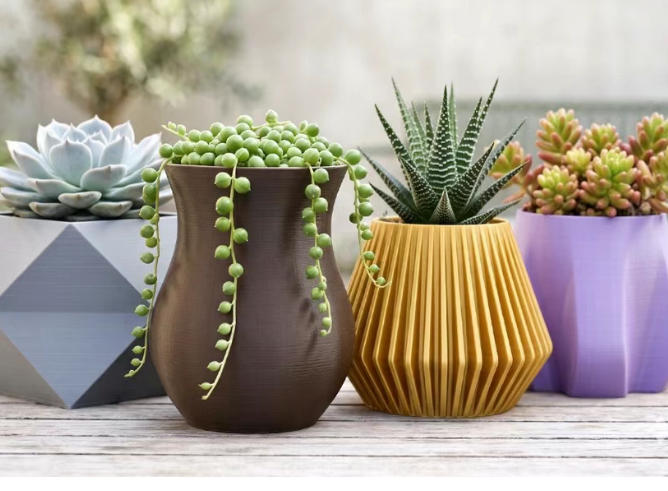
The uniformly distributed coffee particles create a matte finish with diffuse reflection, softly masking layer line imperfections. This enhances the presentation of curved surfaces and intricate details, lending the product a natural, organic aesthetic.
**Broad Applicability: Building a Closed-Loop Industry Chain**
PLA-Coffee filament is compatible with mainstream desktop 3D printers and suitable for a wide range of applications.
It can be used to create cultural and creative ornaments, trendy merchandise, artisanal gifts, and educational training aids. By transforming food service waste-which would otherwise be discarded-into production raw material, the product effectively reduces carbon emissions associated with plastic goods. A green circular model has been established, spanning "coffee ground collection from stores" to "eco-friendly biomass filament production" and "manufacturing of creative finished products."
The implementation of these coffee-ground-based materials marks a significant milestone in both parties' commitment to sustainable development.
eSUN stated that it will continue to explore the potential for developing materials from organic waste in the agriculture, forestry, and food service sectors. The company plans to collaborate with more brands focused on green development to implement large-scale recycled material solutions, driving the entire 3D printing industry chain toward a low-carbon, circular future through material technology innovation.