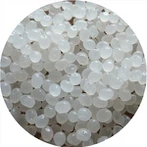
The promotion and application of plastic substitute products is one of the important measures to promote plastic pollution control. As a major alternative to traditional plastics, degradable plastics have always had problems such as uncertain degradation, insufficient output, unclear identification, and time-consuming and difficult detection methods, which hinder the promotion of plastic pollution control.
On November 26, 2021, the State Administration for Market Regulation and the National Standardization Administration issued "GB/T 41008-2021 Biodegradable Drinking Straws". This national recommended standard will be implemented on June 1, 2022.
The promotion and application of plastic substitute products is one of the important measures to promote plastic pollution control. As a major alternative to traditional plastics, degradable plastics have always had problems such as uncertain degradation, insufficient output, unclear identification, and time-consuming and difficult detection methods, which hinder the promotion of plastic pollution control.
This standard applies to straws made of biodegradable resin, straws covered or coated with or compounded with biodegradable plastics in contact with food, and drinking straws made of natural polymer materials as the main raw material, but it is not applicable to pure drinking straws. Straws made of paper.
The specifications specified by the standard, the damage rate of the corrugated part of the bendable straw after straightening, and the solubility requirements are to improve its performance; the specified organic content, chemical properties, and biodegradability requirements are to ensure that it leaks to the environment Complete degradability at medium time.
According to the product form, it is divided into straight straws, bendable straws, pointed straws, scoop-shaped straws, telescopic straws, etc.
The raw materials should be biodegradable plastic resins or natural polymer materials that have been approved for food contact, including but not limited to polylactic acid (PLA), polybutylene succinate (PBS), and polyterephthalate-adipic acid Butanediol (PBAT), polyhydroxyalkanoate (PHA), etc.
Skills requirement:
Appearance: Consistent surface gloss, no stains and stains, smooth outer wall, flat cut, no burrs and cracks.
The damage rate of the corrugated part of the bendable straw should be ≤2% after straightening. For straws made of natural polymer materials, the water content should be ≤10%. For straws made of natural polymer materials that are not resistant to water, after being immersed in liquid, there should be no more than 5mm warped edges, bends, or ruptures that would make the straws unable to be used normally.
The organic content (fixed volatile) content of the straw should meet the requirements of 4.1 in GB/T 41010-2021. (That is: the organic content (volatile solid content) of biodegradable plastics and products should be greater than or equal to 51%.)
The organic content (fixed volatile) content of the straw should meet the requirements of 4.1 in GB/T 41010-2021. (That is: the organic content (volatile solid content) of biodegradable plastics and products should be greater than or equal to 51%.)
Limits of Heavy metals and specific elements
| Heavy metals and specific elements | Limit ( Dry Weight) (mg/kg) |
| AS | ≦5 |
| Cd | ≦0.5 |
| Co | ≦38 |
| Cr | ≦50 |
| Cu | ≦50 |
| F | ≦100 |
| Hg | ≦0.5 |
| Ni | ≦25 |
| Mo | ≦1 |
| Pb | ≦50 |
| Se | ≦0.75 |
| Zn | ≦150 |