


On October 12, a results showcase for a 10,000-mu (approx. 667-hectare) integrated rice-cultivation project-featuring simultaneous film-laying and fertilization-was held in Yingkou, Liaoning Province. The project successfully utilized PBST fully biodegradable agricultural mulch film, a product developed by Sinopec with fully independent intellectual property rights. Compared to traditional cultivation methods, this approach achieved water savings of over 30%, fertilizer savings of over 20%, and the complete elimination of herbicides. It also improved fertilizer utilization efficiency, reduced greenhouse gas emissions (such as methane) from rice paddies, increased rice yields by more than 10% per mu, and boosted the comprehensive income of farmers by over 200 yuan per mu-delivering a win-win outcome for both the environment and economic returns.
What is PBST?
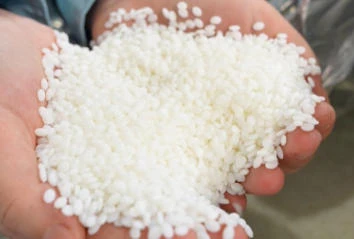
PBST (poly(butylene succinate-co-butylene terephthalate)) is a fully biodegradable material developed by the Beijing Research Institute of Chemical Industry-a subsidiary of Sinopec-with fully independent intellectual property rights. The material is covered by over 100 patent applications.
PBST mulch film boasts high mechanical strength and superior performance in UV resistance and water-vapor barrier properties compared to many other fully biodegradable materials. Within one to three years, it can completely degrade into harmless substances such as water, carbon dioxide, and trace minerals. Its degradation cycle is flexible and adjustable to suit various application requirements; it is currently used in products such as agricultural mulch films, bags, and foam packaging.
In the Yingkou project, the PBST film primarily serves to increase soil temperature and suppress weed growth during the rice growth cycle. Once these functions are fulfilled, the film undergoes a biological degradation process under appropriate field conditions. Through close collaboration across research, development, production, and sales, the project pioneered a technical system combining "new materials, new agronomic practices, and new agricultural machinery." By utilizing integrated film-laying and rice-transplanting equipment, the process achieves the mechanized integration of film laying, anchoring, and rice transplanting-effectively incorporating the PBST film as an integral component of the overall rice production system.


