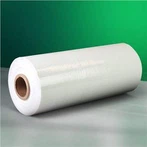
On June 22, 2026, the Fraunhofer CCPE team in Germany announced a new research finding: they can precisely adjust the properties of PBSA/PLA hybrid bioplastics using mature industrial production processes, turning this new material into mass-producible flexible plastic films perfectly suited for actual production and application scenarios.
Many people believe that the usability of biodegradable bioplastics depends solely on the quality of the material itself. However, this research proves that this is not comprehensive. For these environmentally friendly new materials, the degree of matching between the production process, the internal structure of the material, and the performance of the finished product is the key to determining its quality. The research team conducted systematic testing to thoroughly understand how production methods and material ratios affect the final performance of PBSA/PLA films.
The research ultimately concluded that production methods, the internal structure of the material, and the strength of the finished product are closely linked.
The team tested two common film production methods: flat extrusion film production and blown film production. While the PBSA/PLA films produced using the two methods exhibit similar structures at the microscopic level (invisible to the naked eye), they differ significantly at the finer nanoscale.
During flat extrusion film production, the PBSA crystalline structure within the material becomes more orderly and structured; however, films produced using blown film production lack this orderly structural variation. Consequently, the two films cover different performance ranges in terms of hardness and strength, adapting to various application requirements. Their performance is comparable to, and even replaces, commonly used traditional polyolefin plastics on the market.
This research has high practical value for companies across the entire plastics industry chain. Whether it's companies involved in material modification, film processing, or developing new packaging products, the findings can be utilized. Companies can flexibly adjust the formulation and production process of PBSA/PLA blends according to their product needs to customize suitable product performance.
Simultaneously, companies can directly compare the advantages and disadvantages of this new material with traditional plastics such as HDPE (high-density polyethylene), selecting the right material and optimizing solutions for different application scenarios. Furthermore, this experiment used industrial-grade equipment throughout, ensuring the results closely match real-world production lines. Companies can directly refer to these results to guide new product development and process upgrades.
However, this new material has not yet achieved large-scale commercialization. Further optimization of the technology and improvement of the production process are needed before it can be truly widely adopted in the market.
***The Fraunhofer Institute for Applied Scientific Research (Fraunhofer-Gesellschaft) is the world's largest and most prestigious non-profit applied science research institution, and one of the three core pillars of Germany's non-university research system. Founded in Munich in 1949, it is headquartered in Germany and has over 70 specialized research institutes and more than 30,000 research and engineering personnel, covering all of Germany and parts of overseas.