On August 15, 2026, Article 998 of the Ecological and Environmental Protection Law came into effect: It prohibits and restricts non-degradable disposable plastic products and encourages alternative products that are "recyclable, easily recyclable, degradable, and harmless."
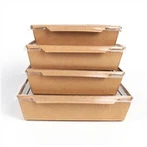
Regarding disposable plastic lunch boxes, the law provides two compliance channels: either "easily recyclable" or "degradable and harmless."
Pure PP follows the "easily recyclable" path, but is banned in Hainan. Pure PP (polypropylene) lunch boxes are made of a single material and can be cleaned, granulated, and recycled at high value through standardized recycling systems (such as Meituan's "Box Fusion"), thus qualifying as "easily recyclable" and outside the prohibited list.
However, local governments can legally issue stricter lists. Hainan, in the form of a negative list, explicitly includes disposable tableware (boxes with lids, bowls with lids, plates, dishes, beverage cups with lids, straws) containing non-biodegradable polymer materials such as PP, PE, PS, PVC, EVA, and PET directly in the prohibited scope.
In other words, in Hainan, pure PP lunch boxes are not exempt from the "theoretically easy to recycle" requirement; their negative list directly prohibits them based on "material + category," regardless of whether there is a recycling system at the back end.
PP + starch: both channels blocked.
Because PP + starch is a blend formula: starch and PP have poor compatibility. During recycling, the starch carbonizes at high temperatures, causing the recycled material to yellow, its mechanical strength to decrease, and it is also prone to mold growth, contaminating the entire batch of recycled materials. This directly blocks the "easy recycling" path that pure PP originally possessed.
The national standard GB/T 41010-2021 stipulates: relative biodegradability ≥90%, and the absolute biodegradability of ≥1% of a single organic component in the material ≥60%. This "and" word effectively blocks PP + starch-starch can degrade, but PP, as a petroleum-based polymer, has an absolute biodegradability rate far below 60%, meaning the overall product will never meet the standard.
The widely circulated notion that "a starch content ≥40% is compliant" is a double misinterpretation. GB/T 18006.1-2009 does indeed contain a clause stating that "the starch content of disposable starch-based plastic tableware should not be less than 40%," but this only applies to products that claim/explicitly state they are starch-based tableware. Furthermore, GB/T 18006.1-2025, which came into effect on March 1, 2026, has removed this clause (the technical requirements for biodegradable tableware have been transferred to GB/T 18006.3-2020). Under the new standard framework, PP + starch food containers must directly meet the hard indicator of biodegradability-something PP simply cannot achieve.
PP + calcium carbonate (stone powder): Neither approach works.
The same applies to PP + calcium carbonate: calcium carbonate does not contribute to biodegradability; it only reduces plastic usage. High addition levels affect the mechanical properties of recycled PP and may introduce the risk of heavy metal migration. It neither satisfies the "biodegradable" requirement nor the "easy to recycle" requirement.
Conclusion: PP + starch/calcium carbonate cannot be sold as "biodegradable."
PP + starch/calcium carbonate cannot be produced or sold as "biodegradable" products. Without the "Double J" biodegradable label, selling products as biodegradable is illegal. According to Article 1225, this could result in a fine of 1-3 times the value of the goods, and in serious cases, license revocation.
PP + starch/calcium carbonate, as ordinary non-biodegradable products, are also subject to restrictions and controls, and the blended formula blocks the path to compliant recycling. In negative list regions like Hainan, disposable lunch boxes containing PP are prohibited regardless of whether they are blended.
There are only two ways to transform:
1. Switch to producing truly fully biodegradable materials (PLA, PBAT, etc.), achieving the overall degradation rate standard and obtaining the "Double J" label;
2. Remove starch/calcium carbonate, produce pure PP single-material transparent lunch boxes, connect to the standardized recycling system and use the "easy recycling" channel, but do not sell to Hainan.
In the legal definition of "biodegradable and harmless," the word "and" is sharper than "biodegradable"-the pseudo-degradation of PP + starch, which claims to be "partially degradable," is precisely where this "and" comes in. The days of relying on additives to skirt the rules and using environmental concepts for premium pricing officially ended on August 15th.