Researchers at St. Edmund's College in Shillong, India, have recently made a significant discovery: they have successfully produced biodegradable plastic films using banana peels. This biomaterial naturally decomposes in soil within a matter of weeks.
Experimental Materials and Preparation Methods
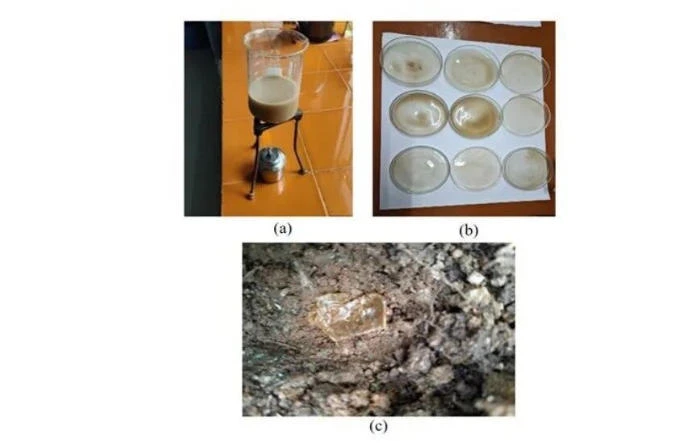
Preparation of banana peel paste: Banana peels were boiled for 30 minutes, drained and air-dried, then ground into a uniform brown paste. Bioplastic synthesis: 0.25g of the paste was mixed with dilute hydrochloric acid and glycerol, neutralized with sodium hydroxide, poured into a Petri dish, and dried in an oven at 130°C; upon cooling, the resulting bioplastic film was peeled off. All experiments were conducted at the Zoology Laboratory of St. Edmund's College.
To test the material's biodegradability, the research team buried fragments of the bioplastic in soil. After 15 days, the material softened, became brittle, and eventually disintegrated. Microbial activity resulted in a weight loss of over 27%, indicating that the bioplastic decomposes rapidly in a natural environment.
The team also tested the material's reaction to water and various solvents. While it absorbed moisture and softened slightly, it remained stable in solvents such as chloroform and methanol, suggesting potential for practical application.
The researchers believe that bioplastics made from banana peels could serve as a sustainable alternative to single-use plastics, helping to reduce plastic waste and promote green consumption.
They plan to further enhance the material's strength and water resistance. Future research aims to achieve large-scale production, enabling wider application of the material as a green alternative to conventional plastics.