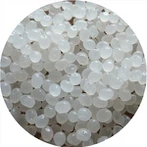
A few days ago, the international academic journal Journal of Hazardous Materials ("Hazardous Materials") reported the latest research results of Sun Chaomin's team at the Institute of Oceanology, Chinese Academy of Sciences. For the first time, they discovered marine microorganisms that can effectively degrade polyethylene terephthalate and polyethylene plastics. Bacteria and enzymes provide important theoretical basis and candidate materials for obtaining plastic-degrading microorganisms and functional enzymes, and developing biological products that degrade plastic waste, and are expected to break through the bottleneck of the degradation of refractory plastic polyethylene.

According to reports, by 2015, humans produced a total of 8.3 billion tons of plastic, of which 6.3 billion tons were discarded as garbage. Due to the wide variety of waste plastics and complex recycling and degradation reactions, only 9% of plastic waste is recycled, 12% is incinerated, and 79% is landfilled or abandoned in the natural environment. According to the current trend, there will be 12 billion tons of plastic waste in landfills and the natural environment by 2050, and the "white pollution" that it forms will bring serious environmental pollution and ecological damage to the world. Therefore, it is extremely urgent to carry out research on plastic degradation system and accelerate the research and development of plastic pollutant treatment technology.
Research has found that after long-term coexistence with plastics and the like, microorganisms have gradually evolved some groups that can effectively degrade plastic waste and are excellent materials for the development of biological products that degrade plastic waste. Sun Chaomin’s team has collected thousands of plastic wastes from the coastal waters of Qingdao since 2016. After a large number of screenings, they found that a bacterial colony is attached to a plastic waste, which has obvious colonization and degradation capabilities on the surface of plastics (PET and PE). This flora can maintain good growth ability in a medium containing plastic waste, and it is speculated that it should obtain an additional source of energy by degrading plastic. Through the quantitative analysis of the types and abundance of the bacterial group composition, it was found that there are 5 types of bacteria as the dominant population. Combined with the culture technology, the pure culture strains of the above 5 types of bacteria were successfully obtained, of which 3 strains have obvious ability to degrade plastics. The 3 strains of bacteria were compounded according to a certain ratio, and successfully obtained a flora that can coexist stably and significantly degrade PET and PE plastic waste. This flora especially likes to degrade PE plastics, which can degrade PE into fragments in two weeks.
The researchers then combined infrared spectroscopy, gel permeation chromatography, X-ray diffraction, high performance liquid chromatography, and mass spectrometry to prove that the above-mentioned flora can effectively degrade PET and PE plastics. The macrotranscriptome technology is used to analyze the bacterial flora in The plastic surface colonizes by forming a biofilm and secretes enzymes to degrade the plastic as an energy source, and then screens a number of candidate enzymes that may be involved in the degradation of PET and PE plastics, and finally combines in vitro expression technology to obtain multiple in 24 hours Enzymes that can obviously degrade PE plastic. Because PE plastics currently lack effective microorganisms and enzymes in the world, the research results have laid a solid foundation for the next step of research on PE degradation mechanisms and the development of PE degradation biological products.