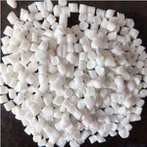
Polylactic acid PLA can be home composted
Recently, Rafael Auras' team at the School of Packaging at Michigan State University in the United States has created a polylactic acid PLA and thermoplastic starch mixture that can be composted in domestic and industrial environments. This work is published in the journal ACS Sustainable Chemistry and Engineering.
In the United States, less than 10% of plastic waste is recycled. This means that most plastic waste ends up as litter or litter, causing economic, environmental and even health problems.
By developing products that are biodegradable and compostable, we can divert some waste and reduce the amount of waste that goes to landfill, Auras said. Another benefit is that the plastic destined for the compost bin does not need to be cleaned of food contaminants, a major hurdle in effectively recycling plastic. Recycling facilities often have to choose between spending time, water and energy cleaning up dirty plastic waste or simply throwing it away.
The team used PLA, which has been used in packaging for more than a decade, and is derived from plant sugar rather than petroleum. When properly managed, the waste by-products of PLA are naturally water, carbon dioxide and lactic acid.
Plus, researchers know that PLA biodegrades in industrial compost. These composts create conditions, such as higher temperatures, that are more conducive to breaking down bioplastics than home composting. However, the idea of making PLA compostable at home seems impossible to some. Because microorganisms cannot attack and consume PLA normally. It has to be broken down to a point where it can be used as food.
In fact, many industrial composters still shy away from accepting bioplastics, such as polylactic acid. In experiments supported by the USDA and MSU's Center for Agricultural Biology Research, the team showed that PLA can sit idle for 20 days before microbes begin digesting it under industrial composting conditions.
To eliminate this lag time and make home composting possible, Auras and his team incorporated a carbohydrate-derived material called thermoplastic starch into PLA. Among other benefits, the starch gives the microbes of the compost something to eat more easily as the PLA degrades.